ATCO training · CBTA · Simulator
How eds supports ATC pre-OJT training
A single cloud platform to design, deliver and continuously improve competency‑based ATCO simulator training – from exercise design to assessment and learning analytics.
01 · Exercise design
CBTA‑based exercise design
EDS provides a structured environment to design ATCO simulator exercises aligned with competency‑based training and assessment framework.
- Leverage ready-to-use rating‑specific training modules (TWR, APP, En Route,…) with their associated competencies and performance criteria, or create your own.
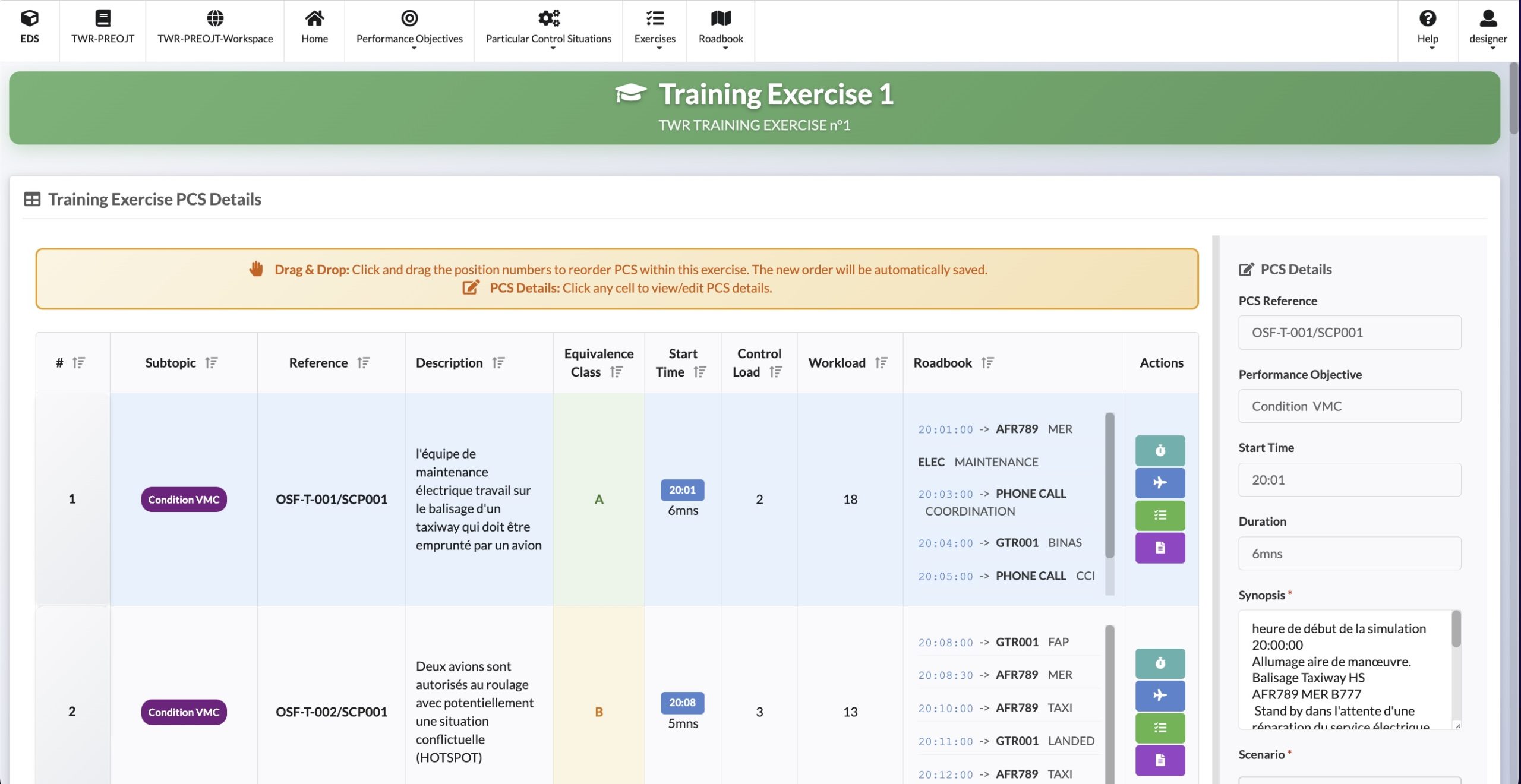
- Organise and manage Performance Objectives and Particular Control Situations (PCS) by taxonomy and difficulty level.
- Automatically generate balanced series of training and assessment exercises with consistent control load and full PCS coverage across cohorts.
- Ensure harmonised training outcomes across training units.
This makes it significantly faster to produce standardised, CBTA‑compliant exercise packages – and easier to justify training design choices during audits.
02 · Scenario management
Scenario and simulator integration
EDS supports the full workflow from scenario design to simulator export, reducing manual preparation time for instructors.
- Build detailed simulator scenario roadbooks with a visual timeline interface.
- Define and organise flight plans, logs and ancillary tasks for each exercise.
- Visualize flights in 2D real-time view.
- Export scenario data to your ATC simulator environment.
Designers spend less time on training design while delivering structured, homogeneous and ICAO-compliant pre-OJT training.
03 · Assessment
KSA‑based assessment and trainee tracking
EDS provides a structured assessment layer aligned with ATCO CBTA frameworks, giving instructors and managers a clear view of each trainee’s competence development.
-
Use standardised evaluation forms linked to KSA and performance criteria for each exercise and PCS.
-
Record and access the full assessment history for each trainee throughout their training programme.
-
Access collaborative dashboards that give instructors and training managers a shared view of progress.
-
Identify competence gaps early and adjust training paths accordingly.
Assessment data is structured, traceable and ready to support internal reviews and external oversight at any time.